How to repair a concrete patio crack yourself
A practical, La Jolla-specific guide to repairing concrete patio cracks yourself: tools, filler types, step-by-step method, costs, and when to call a pro.
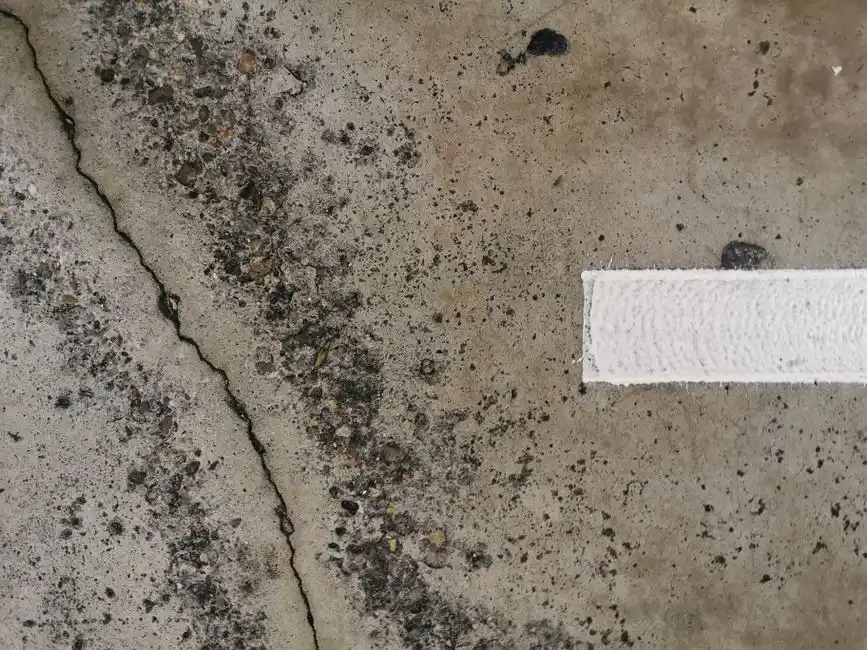
You can repair a concrete patio crack yourself if the crack is hairline to about a quarter-inch wide, the slab is not lifting or sinking, and the surrounding concrete is sound. For anything wider than a half-inch, or any crack paired with vertical displacement, you need a pro because the slab is moving and filler alone will fail within a season.
This guide walks through the exact method we use on patios across La Jolla - from diagnosing the crack to choosing the right filler, prepping the joint, and finishing it so it survives our coastal fog and summer heat. We will also cover 2026 pricing, the mistakes that cause DIY repairs to pop out, and the point where calling a concrete contractor is the cheaper call.
Why Concrete Patios Crack in La Jolla
La Jolla patios crack for four reasons, and the fix depends on which one you are dealing with. The marine layer, clay-heavy soils on the mesa, tree roots, and simple slab shrinkage each produce a different crack pattern.
The coastal fog belt that runs from Windansea up through La Jolla Shores keeps concrete damp for weeks at a time. That moisture wicks into hairline cracks, expands when the sun finally breaks through, and widens the gap season after season. Inland neighborhoods like Mount Soledad and La Jolla Alta see the opposite problem - hotter afternoon sun and faster drying, which drives shrinkage cracks in the first two years after a pour.
Soil matters just as much. Much of the mesa sits on expansive clay that swells in winter and shrinks in summer. A patio poured without a proper base or control joints will crack along the weakest line every time. If you are also seeing cracks in the driveway, our team handles concrete driveway repair in La Jolla, California with the same diagnostic approach.
Here is how to read what you are looking at:
- Hairline cracks (under 1/16 inch): usually cosmetic shrinkage. Seal them before water gets in.
- Cracks 1/8 to 1/4 inch: the sweet spot for DIY filler. Stable slab, just a failed joint.
- Cracks wider than 1/2 inch: the slab is moving. Filler will not hold.
- Cracks with one side higher than the other: settlement or root heave. Call a pro.
How do I repair a concrete patio crack in La Jolla?
You repair a concrete patio crack in La Jolla by cleaning the crack to bare concrete, widening it slightly into a V-shape, filling it with a polyurethane or epoxy-based crack filler, and letting it cure for 24 to 48 hours before walking on it. The whole job on a typical 10-foot crack takes about two hours of actual work spread across two days.
Timing matters more here than most homeowners expect. Do this work in the morning during a dry stretch. La Jolla's marine layer can leave a patio surface damp until 10 or 11 a.m. even in summer, and most fillers will not bond to a wet substrate. Check the forecast and pick a 48-hour window with no rain.
If your patio is stamped or has a decorative finish, the repair is the same but the color matching is trickier. We cover that in more detail on our stamped concrete in La Jolla, California page, because tinted fillers behave differently than standard gray.
What is the best concrete crack filler for patios in La Jolla California?
The best concrete crack filler for patios in La Jolla California is a self-leveling polyurethane sealant for horizontal cracks up to 1/2 inch, and a two-part epoxy injection for structural cracks where you need to rebond the slab. Avoid plain hydraulic cement on a coastal patio - it cracks again within a year.
Here is how the main options compare for a La Jolla patio:
- Self-leveling polyurethane caulk ($12-$20 per 10 oz tube): flexible, handles thermal movement, ideal for hairline to 1/4-inch cracks. Best all-around DIY choice.
- Two-part epoxy injection ($40-$80 per kit): rigid, structural, best for cracks you want to lock shut permanently. Harder to apply.
- Vinyl concrete patcher ($20-$30 per 10 lb bucket): good for wide, shallow spalls, not for narrow cracks.
- Hydraulic cement ($15-$25): fast-setting but brittle. Skip it on outdoor coastal patios.
Buy a filler rated for exterior use and for the temperature range you actually get here - roughly 45°F winter nights to 95°F summer afternoons. Anything rated indoor-only will fail.
Step-by-Step DIY Concrete Patio Crack Repair
Here is the exact sequence. Budget two hours of work on day one and a short cleanup on day two.
Tools and materials
- Wire brush and stiff-bristle hand brush
- Pressure washer or garden hose with a jet nozzle
- Cold chisel and hammer (only if widening is needed)
- Shop vacuum
- Self-leveling polyurethane crack filler or epoxy kit
- Caulk gun, putty knife, or margin trowel
- Sand (for backer on deep cracks)
- Painter's tape (optional, for clean edges)
Step 1: Clean the crack
Run a wire brush through the full length of the crack to knock out loose concrete, dirt, and old sealer. Follow with a pressure washer or a hard jet from the hose. Let it dry completely - 24 hours in La Jolla's humidity is safer than 4.
Step 2: Widen if needed
If the crack is narrower than 1/8 inch, most fillers cannot get in. Use a cold chisel to open it into a shallow V about 1/4 inch wide at the top. This gives the filler something to grip.
Step 3: Back the crack if it is deep
For cracks deeper than 1/2 inch, pour in a little clean sand to within 1/4 inch of the surface. This stops the filler from draining away and saves product.
Step 4: Apply the filler
For self-leveling polyurethane, load the caulk gun and lay a steady bead along the crack, slightly overfilling. It will settle on its own. For epoxy, follow the kit's mix ratio exactly - a 1:1 mix that is off by even 10% will not cure hard.
Step 5: Finish and cure
For polyurethane, leave it alone. For epoxy or patcher, smooth with a putty knife and wipe the edges with a damp rag. Keep foot traffic off for 24 hours and vehicles off for 48. Full cure takes 7 days.
How much does concrete patio crack repair cost in La Jolla?
DIY concrete patio crack repair in La Jolla costs $30 to $120 in materials for a typical patio with a handful of cracks. Hiring a professional runs $250 to $600 for cosmetic crack sealing, and $1,200 to $3,500 if the repair involves slab lifting, patching, or resurfacing.
Typical 2026 pricing in this area breaks down roughly like this:
- DIY materials: $30-$120
- Pro crack sealing (small patio): $250-$600
- Pro crack repair with patching: $600-$1,500
- Slab lifting or mudjacking: $800-$2,500
- Full patio resurfacing: $1,200-$3,500
If your patio is in a neighborhood like Bird Rock or the Beach Barber Tract where lots are tight and access is limited, expect the higher end of those ranges. Our team provides concrete patio repair in La Jolla, California with upfront pricing before any work starts.
Common Mistakes to Avoid
The most common mistake is filling a crack that is still moving. If the slab is shifting, the filler will crack out within one season and you will have wasted both the product and the weekend.
Other mistakes we see on patios around La Jolla:
- Filling a wet crack. Polyurethane will not bond to damp concrete. Wait for a dry stretch.
- Using the wrong filler. Rigid epoxy on a crack that needs to flex will fail. Flexible caulk on a structural crack will too.
- Skipping the clean-out. Dust and old sealer are the number one reason DIY repairs pop out.
- Overfilling without smoothing. A proud bead of filler catches shoes and looks worse than the crack did.
- Ignoring the cause. If a downspout is dumping water onto the patio, the next crack is already forming.
If you are also seeing cracks in the walkway leading to the patio, our concrete walkway repair in La Jolla, California service addresses those with the same method.
When to Call a Professional
Call a professional when the crack is wider than 1/2 inch, when one side of the crack is higher than the other, when you have three or more cracks radiating from a single point, or when the slab sounds hollow when you tap it. Those are all signs of movement underneath, and no surface filler fixes that.
We handle those jobs every week in La Jolla. Our team diagnoses the cause first - soil, drainage, root intrusion - then repairs the slab so the fix actually holds. If you are in one of the hillside neighborhoods like Muirlands or La Jolla Heights, we also check for retaining wall issues that can push a patio out of level. You can see the full range of what we do on our Concrete services in La Jolla, California page.
If your patio is in the Windansea Beach area, salt air and blowing sand accelerate wear on both the concrete and the filler. We see more frequent re-sealing needed there than anywhere else in the neighborhood. Our Concrete services in Windansea Beach page covers the specific approach we use on coastal patios.
Frequently Asked Questions
How do I repair a concrete patio crack in La Jolla?
Clean the crack to bare concrete, widen it into a shallow V if it is under 1/8 inch, then fill with a self-leveling polyurethane sealant for cracks up to 1/2 inch. Let it cure 24 to 48 hours. For wider or displaced cracks, call a pro.
What is the best concrete crack filler for patios in La Jolla California?
Self-leveling polyurethane sealant is the best choice for most La Jolla patios - it flexes with temperature swings and handles the coastal humidity. Use two-part epoxy injection only for structural cracks you want locked rigid.
Can I repair a concrete patio crack myself in La Jolla?
Yes, if the crack is hairline to 1/4 inch, the slab is level, and the surrounding concrete is sound. Materials cost $30 to $120 and the job takes about two hours of work across two days. Anything wider or displaced needs a professional.
How much does concrete patio crack repair cost in La Jolla?
DIY materials run $30 to $120. Professional crack sealing costs $250 to $600 for a typical patio. Repairs involving slab lifting or resurfacing run $1,200 to $3,500 depending on patio size and access.
How long does a DIY concrete patio crack repair last?
A properly prepped polyurethane repair lasts 3 to 7 years on a stable slab. If the crack reopens within a year, the slab is moving and the repair needs to address the cause, not just the surface.
Get help with Concrete services in La Jolla
If your patio crack is wider than a half-inch, if the slab is uneven, or if you would rather have it done once and done right, we can help. We repair and resurface patios across La Jolla with upfront pricing and no surprises.
Call La Jolla Concrete Services at +1 (619) 984-1234 to schedule a look at your patio.