How to fix a sunken concrete walkway in Bird Rock
A sunken walkway in Bird Rock is almost always a soil problem, not a concrete problem. Here is how mudjacking, foam jacking, and replacement compare in 2026.
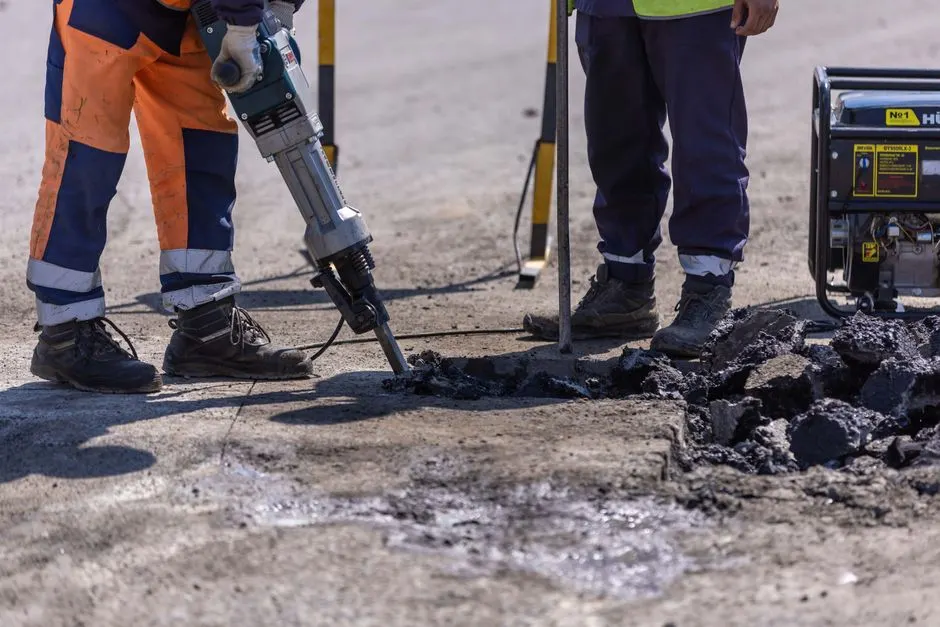
You fix a sunken concrete walkway in Bird Rock by lifting the slab back to grade rather than pouring a new one. Mudjacking or polyurethane foam jacking pumps material underneath the slab, fills the void, and raises it level in a few hours for roughly a third of replacement cost. Replacement is the right call only when the concrete itself is cracked through or crumbling.
The reason it sank matters more than the repair method. Bird Rock sits on a coastal bluff with sandy loam over clay, and that soil moves every time we get a wet winter. Fix the slab without addressing drainage and you will be back out there in two years. Here is what we look at, what each fix costs in 2026, and where DIY stops working.
Why Bird Rock walkways sink in the first place
Bird Rock walkways sink because the soil under them compresses, erodes, or washes away - the concrete slab itself usually stays intact. A 4-inch walkway slab weighs about 50 pounds per square foot, and it only holds its elevation if what is beneath it holds too.
Four things cause that support to disappear in this neighborhood:
- Bluff-edge erosion. Properties on the west side of Bird Rock Avenue and down toward Calumet Park sit on soil that drains toward the ocean. Irrigation and rain carry fine sand out from under slabs over years.
- Clay expansion and contraction. The clay layer under the sandy topsoil swells in a wet January and shrinks by August. Slabs poured over that layer rock, settle, and never come back to the same height.
- Poor original compaction. A lot of Bird Rock housing stock went up in the 1950s and 1960s, and walkways were often poured over backfill that was never mechanically compacted.
- Plumbing and irrigation leaks. A slow leak in a hose bib line or a broken sprinkler head saturates the subgrade and turns it to mush.
If your walkway drops near a downspout, a hose bib, or the property line where the neighbor's grade is higher, that is a drainage problem wearing a concrete costume. We see the same pattern on Concrete services in Bird Rock calls all year - the slab is fine, the ground under it is not.
How do I fix a sunken concrete walkway in Bird Rock?
You fix it by injecting material under the slab until it rises back to grade, then sealing the joints and correcting whatever is washing the soil out. That is the whole method. The variables are what you inject, how many injection points you need, and whether the slab is worth saving.
Here is how the three real options compare:
- Mudjacking (slabjacking). We drill 1.5- to 2-inch holes through the slab, pump a cement-and-soil slurry underneath, and raise the walkway in controlled lifts. Material cost is low, cure time is fast, and it handles voids up to several feet deep.
- Polyurethane foam jacking. We inject expanding two-part foam through smaller holes - often 5/8 inch. The foam is lightweight, sets in about 15 minutes, and does not add water to already-wet soil. It costs more per project but is the better fit on soft coastal ground.
- Remove and repour. When the slab is cracked into pieces, spalled, or has a failed control joint, lifting it just moves the problem. We break it out, recompact the base, and pour new concrete - sometimes with a thicker section and rebar where the old slab had neither.
For a typical 40-foot Bird Rock front walkway, lifting runs one visit of two to four hours. Replacement runs two to three days including cure time before you can walk on it. If you are weighing that against a full tear-out, our concrete walkway repair in La Jolla, California page covers the repair side in more detail.
Mudjacking vs. foam jacking: which one holds in Bird Rock soil?
Foam jacking holds better in Bird Rock because it does not add water to soil that is already the problem. That is the short answer. The longer answer depends on how deep the void is and how much weight the slab carries.
Mudjacking slurry is heavy - roughly 100 to 120 pounds per cubic foot - and it is mixed with water. On a walkway over sandy loam that drains poorly, that water has to go somewhere, and it can soften the very subgrade you are trying to stabilize. On a deep void, though, cement slurry is cheaper per cubic yard and it fills big cavities fast.
Polyurethane foam weighs about 2 to 4 pounds per cubic foot once cured. It expands to fill irregular voids, it does not wash out, and it will not wick moisture into the slab. On a coastal property where the water table is high in winter, that matters.
Our rule of thumb for walkways in this neighborhood:
- Void under 6 inches, sandy or wet soil: foam jacking.
- Void 6 to 24 inches, dry and stable soil: mudjacking.
- Slab cracked through or spalled: replace it, and fix the base while you are in there.
If you are also dealing with a driveway that has dropped at the apron, the same logic applies - see our notes on concrete driveway repair in La Jolla, California for how we handle heavier slabs.
How much does sunken concrete walkway repair cost in La Jolla California?
Sunken concrete walkway repair in La Jolla California runs $600 to $1,800 for a typical residential front walk using foam jacking, and $450 to $1,200 using mudjacking. That is 2026 pricing for this area. Full replacement of the same walkway runs $2,500 to $5,500 depending on length, width, and access.
What moves the number:
- Linear feet. Most Bird Rock front walks are 30 to 60 feet. Foam jacking prices out around $18 to $30 per linear foot; mudjacking around $12 to $22.
- Number of slabs. A walkway with four settled panels costs less than one with twelve, even at the same total length.
- Access. If we can park a truck within 50 feet, standard pricing. Steep driveways off Bird Rock Avenue or tight side yards add labor.
- Drainage correction. Regrading, extending a downspout, or repairing a broken irrigation line adds $200 to $800 and is often the difference between a fix that lasts and one that does not.
- Permits. Walkway repair inside your own property usually does not need one. Work in the public right-of-way near the sidewalk does, and the City of San Diego reviews those.
We quote the lift and the drainage fix together, because doing one without the other is how homeowners end up paying twice.
Can I raise a sunken concrete walkway myself in Bird Rock?
You can raise a small, isolated slab yourself if it is under about 4 feet by 4 feet and the drop is under an inch. Beyond that, the equipment and the risk stop making sense for a homeowner. Here is the honest breakdown.
What a homeowner can realistically do:
- Lift a small paver or stepping-stone section by hand and re-set it on compacted base.
- Mudjack a single small slab using a rented hydraulic pump and a bag of slabjacking mix - a weekend job, roughly $150 to $300 in rental and material.
- Fix the drainage: extend downspouts, repair sprinkler leaks, regrade soil away from the slab.
Where DIY fails:
- Raising a slab too fast cracks it. Slurry has to go in slow lifts with the level checked between each one.
- Over-lifting is common and hard to undo. Once a slab is past grade, you are pulling it out.
- Rented pumps are sized for flatwork, not for the deep voids we see on bluff-edge properties.
- You cannot see what is happening under the slab. We probe the void before we drill, so we know how much material it will take.
If the walkway is more than one panel, or if it has dropped more than an inch, call someone. The cost of a failed DIY lift plus the eventual professional repair is more than the repair alone.
Common mistakes we see on Bird Rock walkway repairs
The most common mistake on Bird Rock walkway repairs is lifting the slab without fixing the water that caused the settlement. We get called to re-lift walkways that someone else jacked three or four years ago, and the concrete is fine - the soil under it washed out again.
Others we run into:
- Drilling too few injection points. One hole in the middle of a 10-foot slab will lift the center and leave the ends low. You need points every 4 to 6 feet along the length.
- Using the wrong material on wet ground. Cement slurry on saturated sandy soil can sink again within a season.
- Skipping the joint seal. Open control joints let water straight into the subgrade. We clean and seal them as part of the job.
- Repouring over the same bad base. If the new slab goes down on the same uncompacted fill, it settles too. We recompact and, where it fits, add a thicker section with rebar.
- Ignoring the neighbor's grade. On tight Bird Rock lots, water from uphill properties is often the actual source. That is a conversation, not a concrete pour.
We also see homeowners patch a settled slab with self-leveling compound. That is a cosmetic fix on a structural problem, and it cracks within a year.
When to call a professional
Call a professional when the walkway has dropped more than an inch, when more than one slab is affected, or when you can see a crack running through the slab rather than just at the joints. Those three signs mean the subgrade has moved enough that a surface fix will not hold.
We handle this work every week across the neighborhood, and the pattern is consistent: the walkways that fail are the ones with a water source nearby. If you are not sure whether your walkway is a lift job or a replacement job, we will come out, probe the void, and tell you which one it is before any work starts. That is the same approach we bring to Concrete services in La Jolla, California across every project, from a single walkway panel to a full front-yard repour.
If your walkway is on the bluff side and the soil is sandy, expect foam jacking to be the recommendation. If it is inland on clay and the void is deep, mudjacking is usually the better value. Either way, the drainage fix comes with it.
Frequently Asked Questions
How do I fix a sunken concrete walkway in Bird Rock?
Lift the slab with mudjacking or polyurethane foam jacking, then fix the drainage that caused the settlement. Foam jacking is the better fit on Bird Rock's sandy coastal soil. A typical front walk takes two to four hours and runs $600 to $1,800 in 2026.
How much does sunken concrete walkway repair cost in La Jolla California?
Expect $450 to $1,200 for mudjacking and $600 to $1,800 for foam jacking on a standard residential walkway. Full replacement runs $2,500 to $5,500. Drainage corrections add $200 to $800 and are often necessary for the repair to last.
Can I raise a sunken concrete walkway myself in Bird Rock?
Only for a single small slab under 4 feet by 4 feet with less than an inch of drop. Renting a pump and slabjacking mix costs $150 to $300. Anything larger, or any slab cracked through, needs a professional lift or replacement.
Who repairs sunken concrete walkways in Bird Rock La Jolla?
La Jolla Concrete Services repairs sunken walkways throughout Bird Rock and the surrounding La Jolla neighborhoods. We probe the void, recommend foam jacking or mudjacking based on soil conditions, correct the drainage, and seal the joints before we leave.
How long does a lifted walkway last?
A foam-jacked walkway with corrected drainage typically holds 10 to 15 years or more. Mudjacking on stable soil lasts a similar span. If the water source is not fixed, expect settlement again within two to four years.
Get help with Concrete services in La Jolla
We lift sunken walkways across Bird Rock, Windansea, and the rest of La Jolla, and we fix the drainage that caused the problem in the first place. Call us at +1 619-984-1234 and we will come out, probe the slab, and give you a straight answer on lift versus replace.